People
Lead the study, use their judgment and approve the result.

Process Safety R&D
PAI helps a Process Safety team get ready for HAZOP or LOPA work. It brings together process descriptions, operating procedures and engineer-marked drawings, then builds a reviewable workbook for tools such as OpenPHA. After the workshop, it can help organize the study record and prepare a structured report.
Controlled workflow sequence
Step 1 of 6
Pre-study workbook · approved sourcesReady to begin when visible.
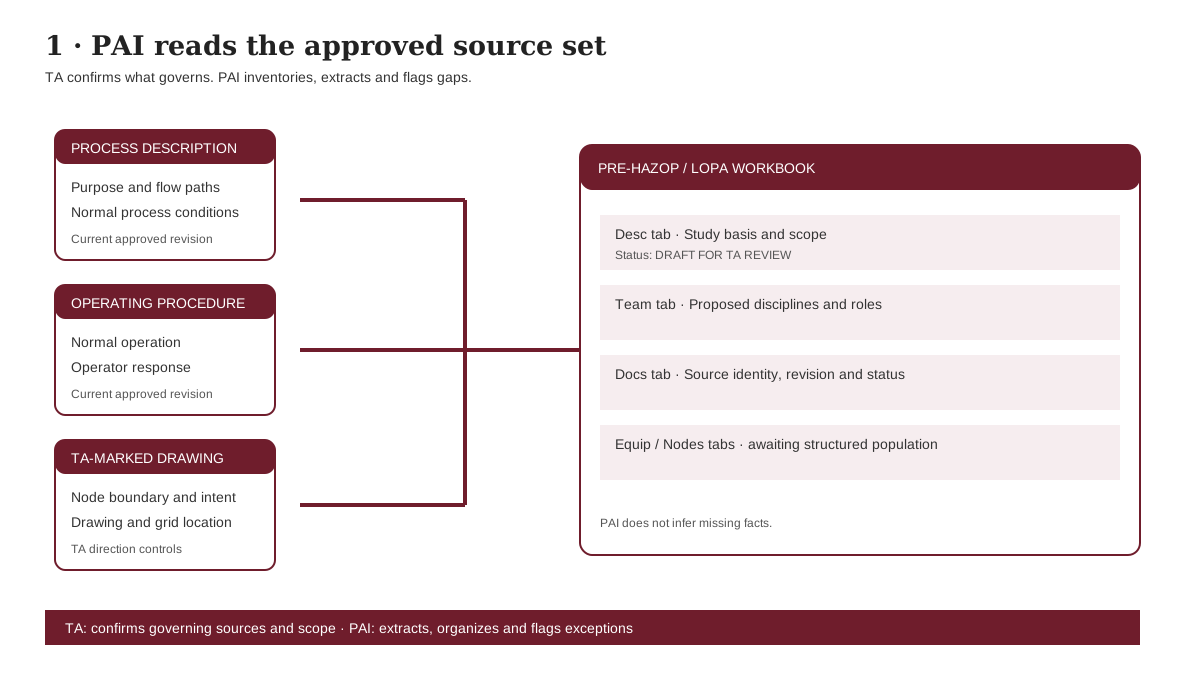
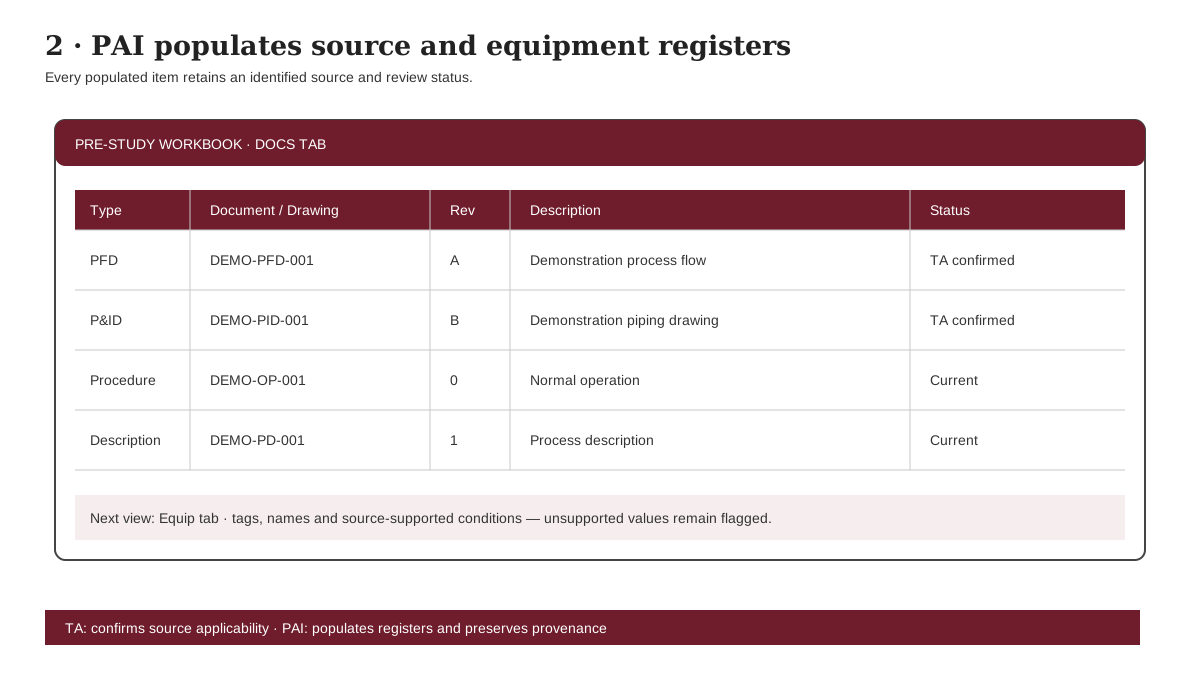
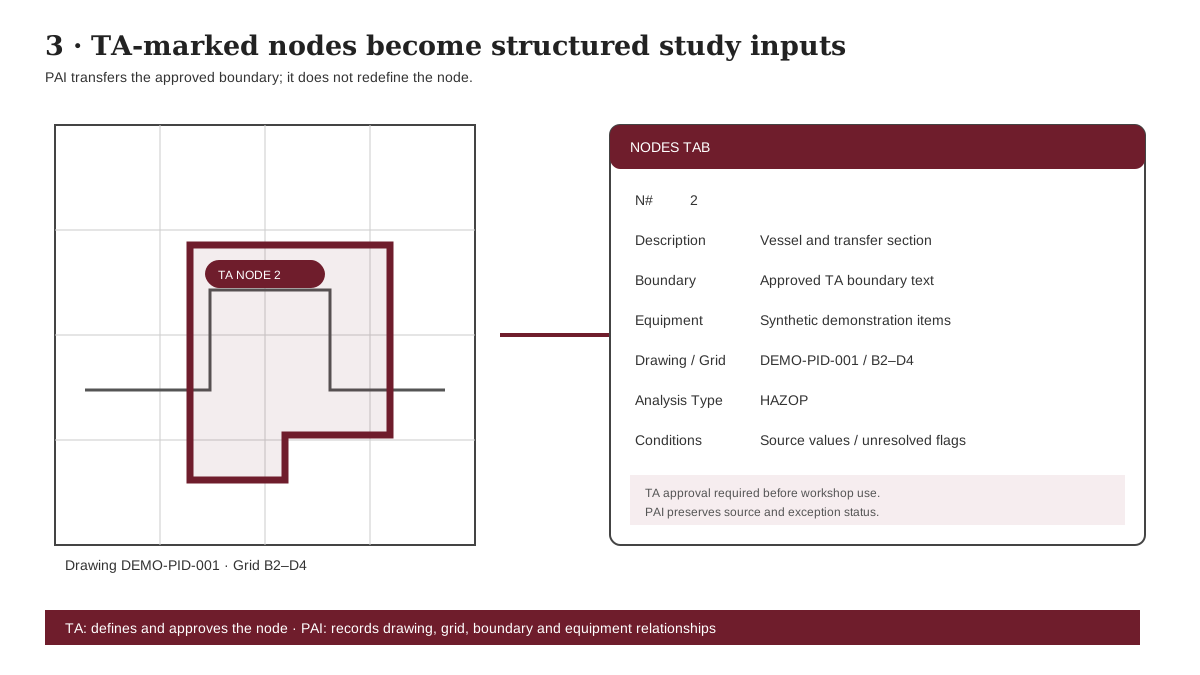
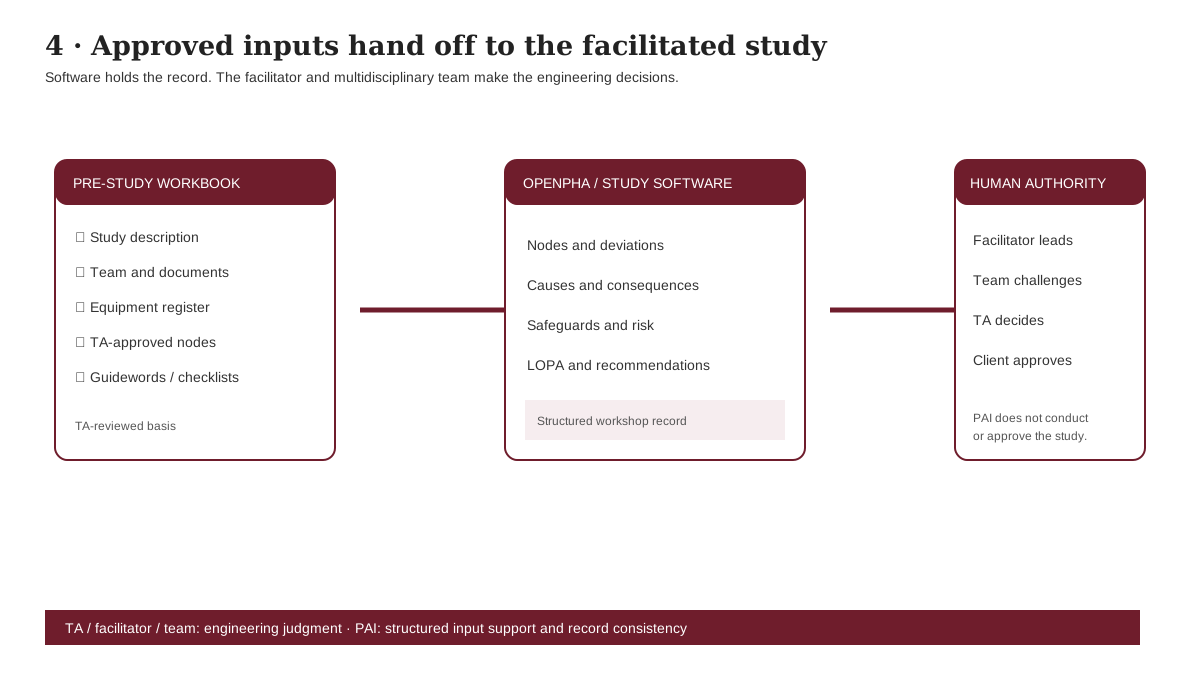
PAI organizes the approved study basis. The TA confirms what governs; PAI extracts, structures and flags gaps.
Before. PAI prepares a reviewable workbook from approved sources and TA-defined nodes.
Workshop. The facilitator and multidisciplinary team conduct the study and make the engineering decisions.
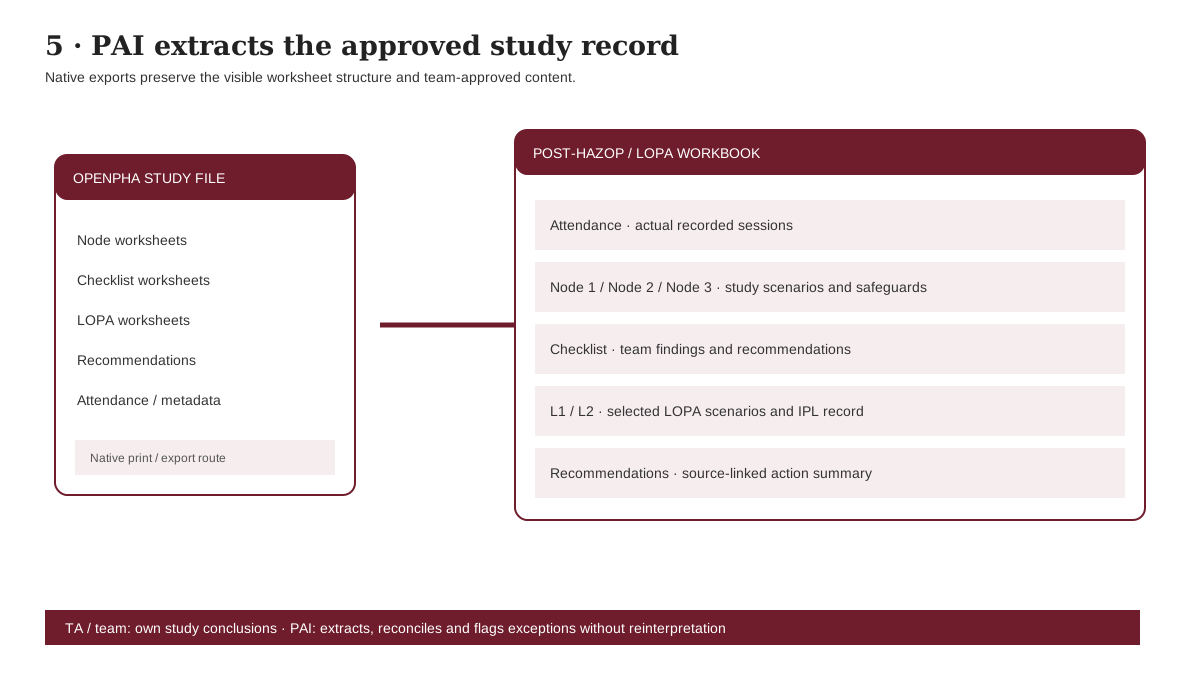
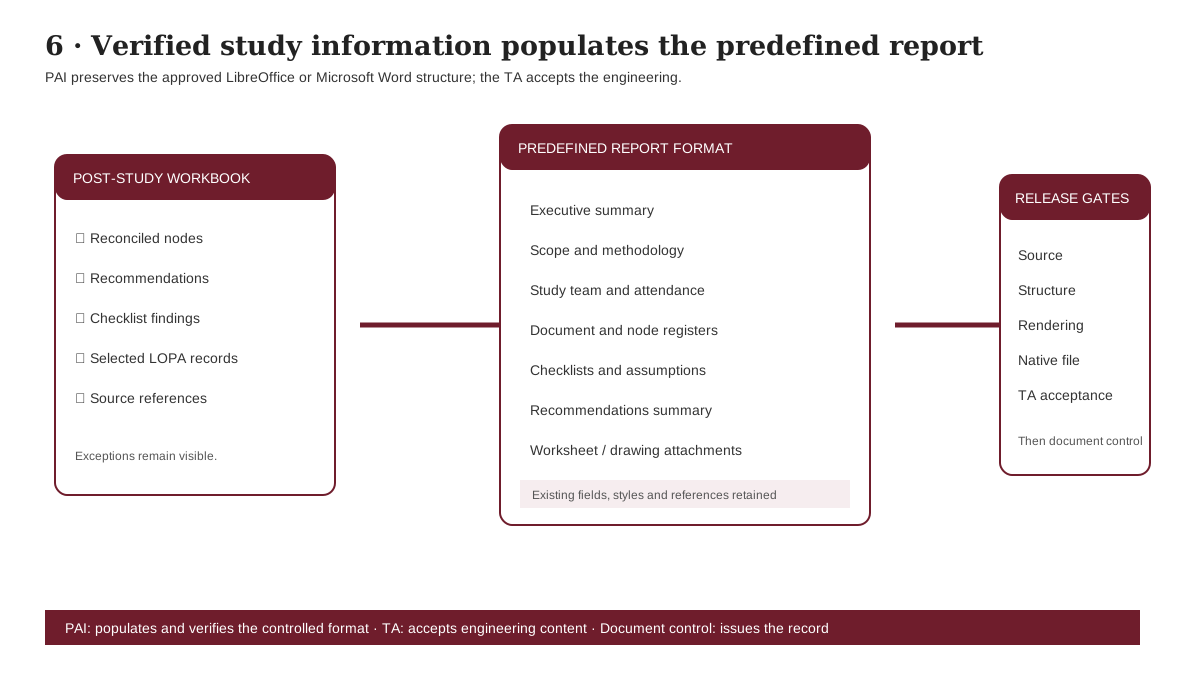
After. PAI structures approved outputs, populates the report format and records verification evidence for acceptance.
Who decides
The Technical Authority, facilitator and study team set the scope, choose the nodes and deviations, assess the scenarios, develop recommendations and approve the record. Document control issues the final deliverable.
PAI organizes, checks and drafts. People make the engineering decisions.
Questions
The project basis controls the software, templates and review process for each study.
No. A qualified facilitator and study team conduct the HAZOP; PAI supports the record.
It can assist with drawing references, grids, equipment and marked nodes. The Technical Authority markup remains controlling.
Missing or conflicting information is flagged for review, not represented as confirmed project data.
They preserve the visible worksheet structure and relationships needed for review and controlled transfer.
The initial dataset originated from a review of published papers, books and presentations. PAI was then trained systematically using a sample project before implementation on a West African refinery project, followed by subsequent refinement. As PAI was trained, each lesson learned was documented in a PSM AI Manual. Before supporting HAZOP preparation, PAI reads that manual as an engineer would consult a governing procedure; the human study team still conducts the HAZOP and makes the engineering decisions.
Only generalized workflow lessons. Client-specific process details, drawings, safeguards, recommendations, personnel, risk results and controlled deliverables are intentionally excluded.
Process-safety judgment
Pelican combines senior-led PHA and HAZOP experience with controlled, AI-assisted information handling to support accountable engineering decisions.