
Impaired-Water Use Case 03
Brackish Groundwater
Naturally mineralized groundwater can be an additional water source when its salinity, sustainable yield and connection to freshwater are understood.
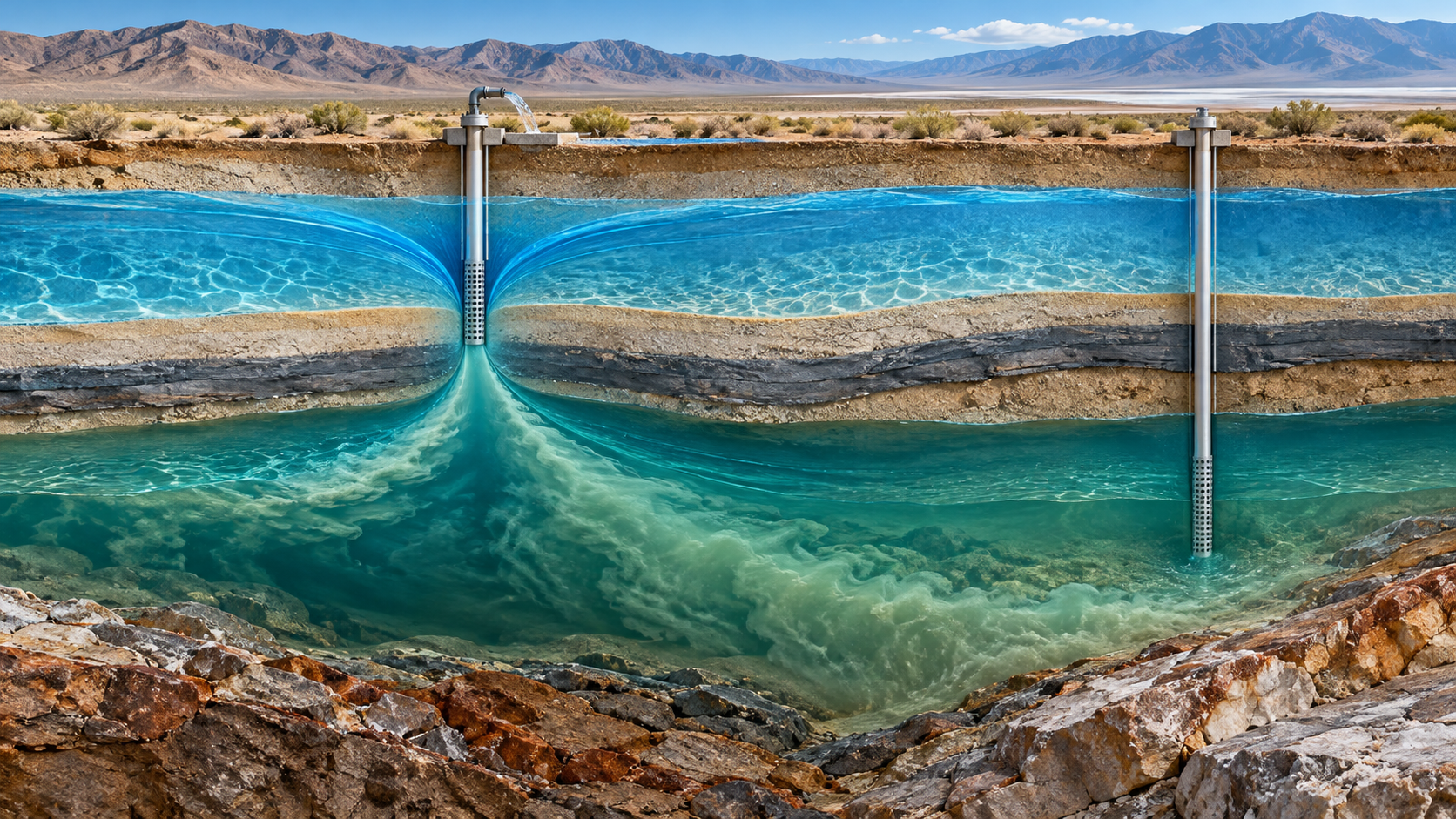
Understand the Source
Start With the Water
How the Source Develops
Groundwater can dissolve minerals as it moves through rock and sediment. Mixing with saline water can also increase dissolved salts. Brackish groundwater lies between freshwater and seawater in salinity; its occurrence does not by itself indicate pollution.
Why Treatment Is Required
Dissolved salts can limit drinking, irrigation or industrial uses. Desalination and any additional treatment must be selected from local water analysis, including constituents other than salt. Concentrate still needs a suitable management route.
Nearby Water and Aquifers
Pumping can change groundwater gradients and move more saline water toward fresher zones. Where groundwater and surface water are connected, withdrawals may also affect streamflow. An apparently separate deep water source cannot be assumed hydraulically isolated.
Where Valora May Fit
Brackish groundwater may be locally abundant but unsuitable for direct human or industrial use. Salinity, hardness, silica, metals, well yield and recharge determine whether recovery is technically and environmentally practical.
Where usable waste heat is nearby, Valora may provide a thermal alternative or complement to membrane desalination, particularly when feed chemistry or concentrate management drives the project.
View the Valora Process Animation
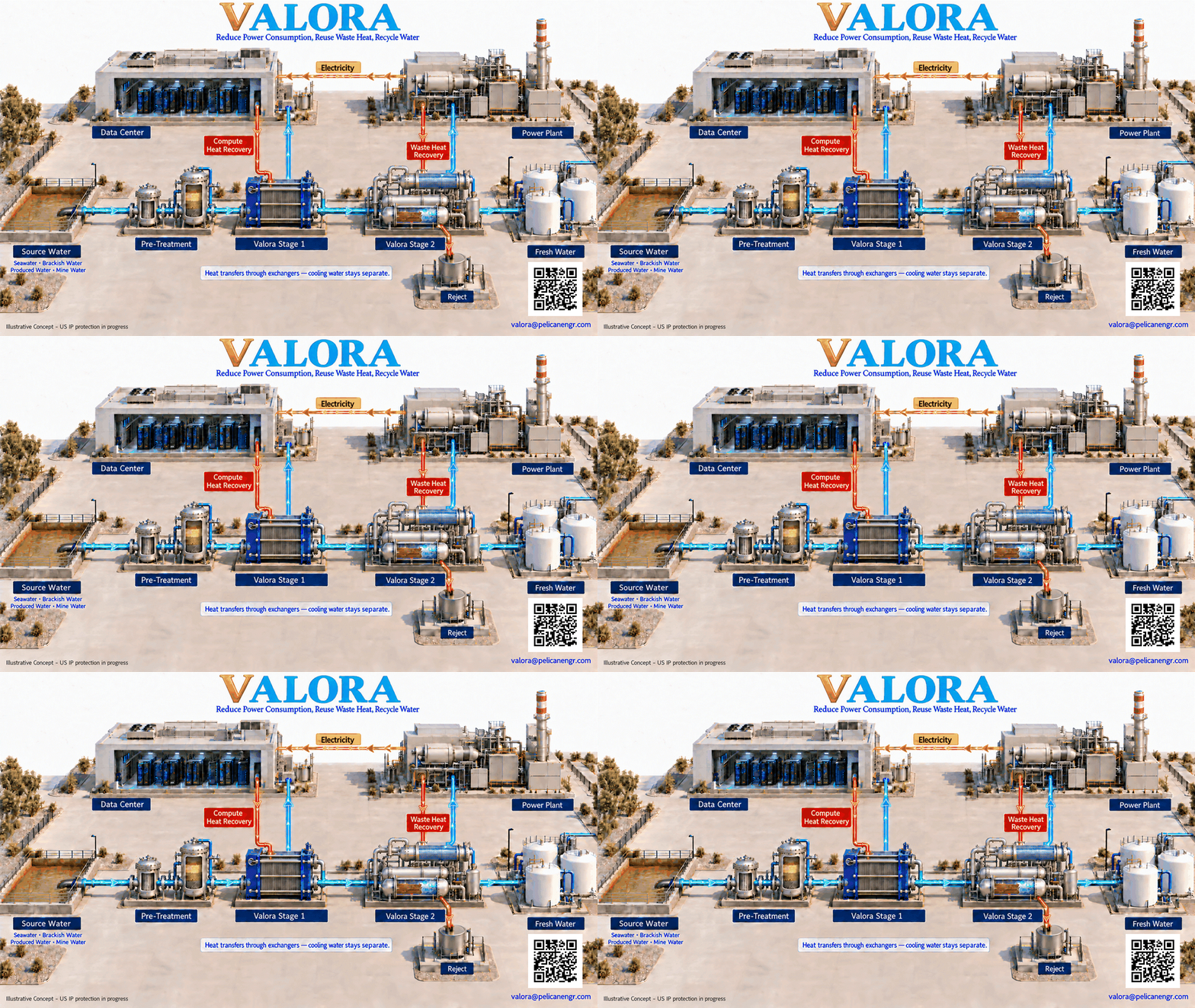
Valora keeps the protected cooling loop separate from the water process and uses a heat exchanger to share useful heat. The site team then confirms the treatment performance, water quality and residuals plan.
Candidate Treatment Pathway
- 01Select and Test a Representative Well
- 02Establish Sustainable Yield and Source Protection
- 03Pretreat for Solids, Hardness, Silica and Metals
- 04Integrate Recovered Heat and Thermal Separation
- 05Qualify Product Water and Manage Concentrate
Valora Role
Recovered heat may preheat the brackish feed and support multi-stage thermal distillation (MSTD) or MED service, reducing the incremental thermal duty otherwise required for desalination.
Potential Value
- Create a local water source without relying solely on freshwater supplies
- Pair water production with power or data-center development
- Improve utilization of rejected heat
- Support modular, site-specific capacity
What Must Be Proven
- Aquifer yield, recharge and withdrawal rights
- Full ionic composition and scaling tendency
- Recovery ratio and concentrate disposition
- Product-water specification
- Lifecycle cost against membrane alternatives
A Water Project Begins Below Ground
Pelican can frame the well, chemistry, heat source and end-use basis before selecting the preferred desalination configuration.
Start a Brackish-Water ScreenTechnical Sources
General source-water and environmental context, not validation of Valora or a specific site.
A site study confirms water availability, treatment, residuals and approvals.