
Impaired-Water Use Case 04
Municipal and Industrial Water
Wastewater reflects the homes, businesses and processes that create it. Understanding those inputs reveals where reuse can add value.
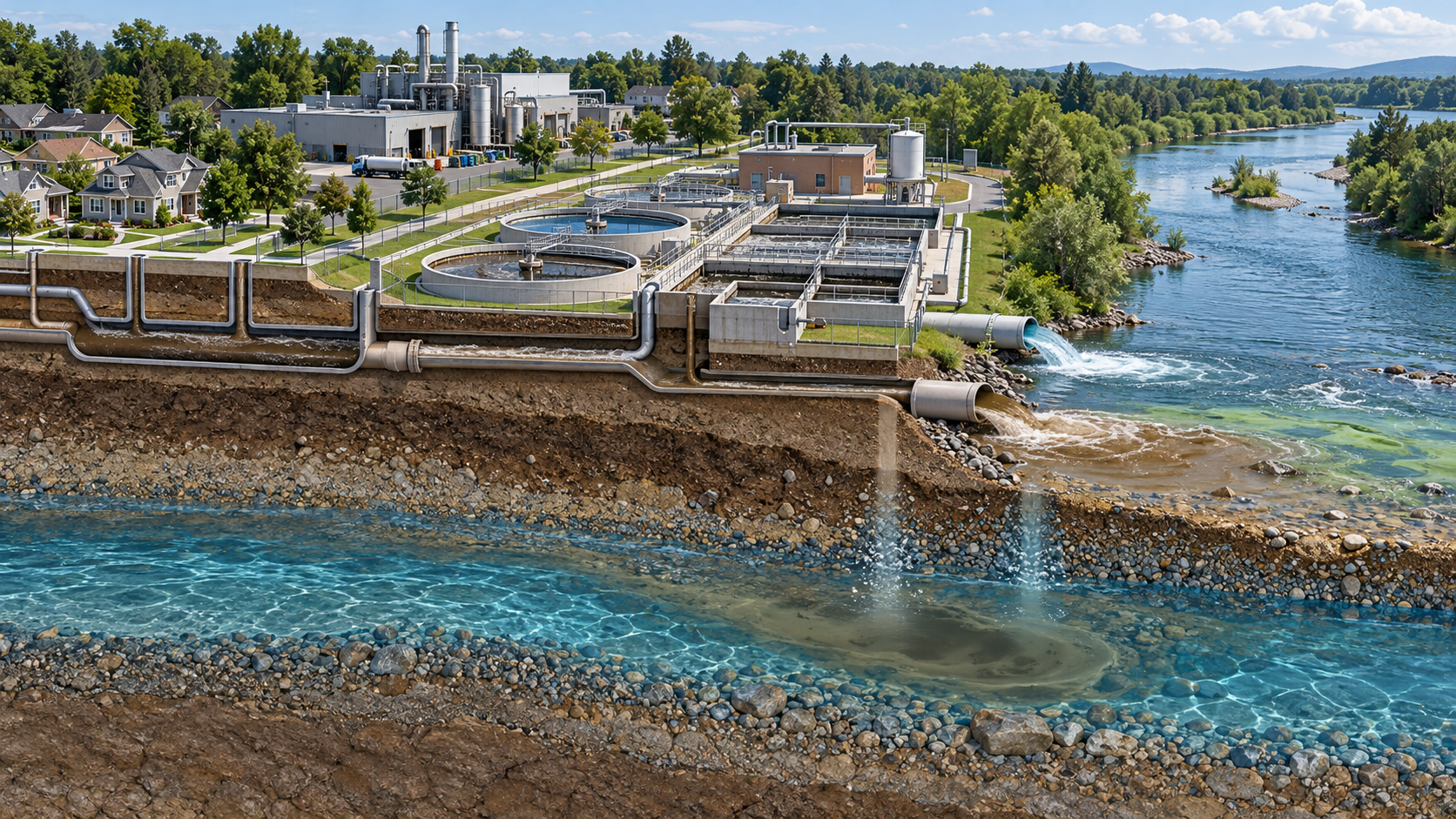
Understand the Source
Start With the Water
How the Source Develops
Municipal wastewater combines flows from homes and businesses and, in some systems, industrial users. Industrial process water can have very different chemistry. Stormwater entry and groundwater infiltration can change sewer flows and loading.
Why Treatment Is Required
Wastewater requires treatment appropriate to its composition and destination. Industrial pretreatment helps prevent pollutants from interfering with municipal treatment or passing through it. Municipal and industrial streams should not be treated as interchangeable feeds.
Nearby Water and Aquifers
Untreated releases or inadequately controlled discharges can carry pollutants to receiving waters. For land application or infiltration, groundwater protection also needs assessment. The relevant pathway depends on collection-system integrity, treatment, local soils and hydrogeology.
Where Valora May Fit
Municipal wastewater and industrial effluent often require biological, chemical, membrane and disinfection steps that cannot be replaced by heat alone. The project question is where a thermal step may create incremental recovery or reduce a difficult residual stream.
Valora may support a separately qualified polishing, concentration or water-recovery duty while leaving incumbent treatment barriers in place.
View the Valora Process Animation
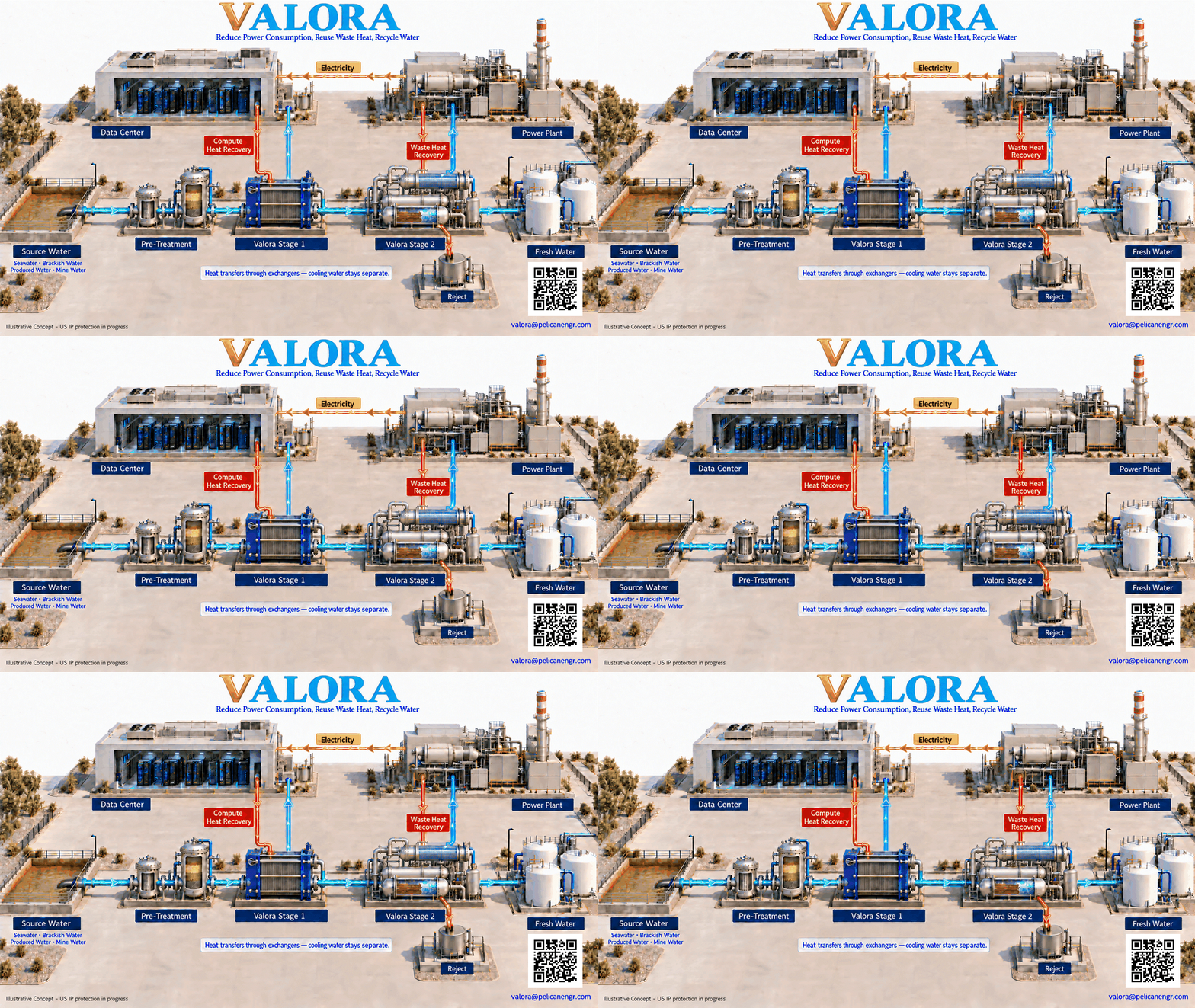
Valora keeps the protected cooling loop separate from the water process and uses a heat exchanger to share useful heat. The site team then confirms the treatment performance, water quality and residuals plan.
Candidate Treatment Pathway
- 01Define Influent, Incumbent Process and Reuse Target
- 02Retain Required Biological and Chemical Treatment
- 03Identify a Qualified Thermal Polishing or Concentration Duty
- 04Integrate Available Recovered Heat
- 05Verify Product Water, Residuals and Public-Health Barriers
Valora Role
Valora may transfer recovered heat into a defined side stream or final polishing duty without claiming to replace the core treatment processes required for the source water.
Potential Value
- Increase recovery from an existing treatment facility
- Concentrate selected residual streams
- Support industrial reuse or other approved applications
- Create a local-benefit story around adjacent energy or compute infrastructure
What Must Be Proven
- Influent variability and incumbent process performance
- Exact thermal duty and integration boundary
- Pathogens, trace organics and product-water barriers
- Residuals handling and discharge requirements
- Utility, operator and regulator acceptance
Use Heat Where It Adds Value
Pelican can help identify the specific thermal duty, integration point and commercial benefit without overstating what heat recovery can replace.
Start a Water-Reuse ScreenTechnical Sources
General source-water and environmental context, not validation of Valora or a specific site.
A site study confirms the treatment plan, end use and approvals.