
Impaired-Water Use Case 02
Produced Water
Water produced with oil and gas needs a clear path from separation and storage to treatment, reuse or disposal.
Understand the Source
Start With the Water
How the Source Develops
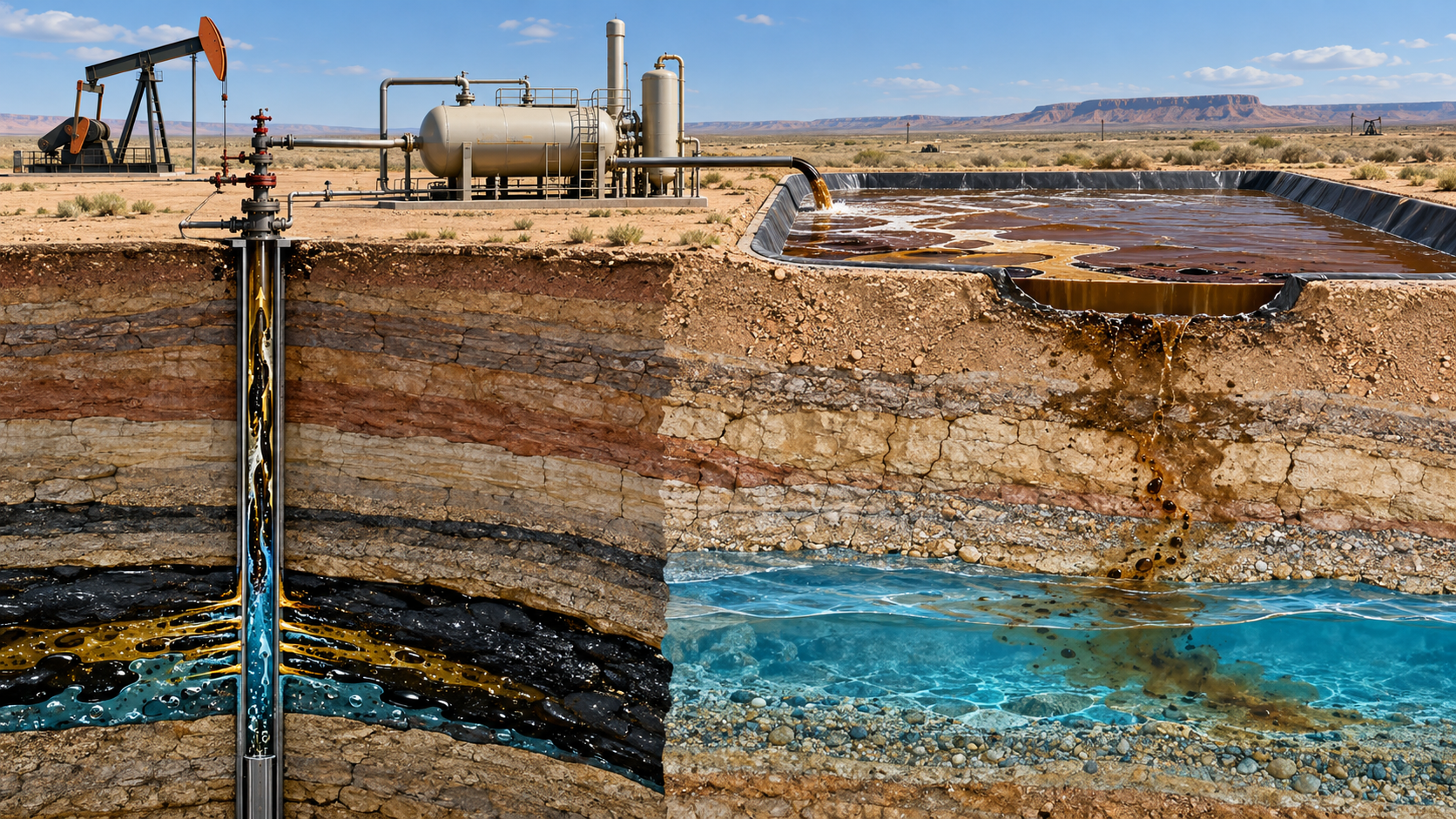
Oil and gas reservoirs often contain formation water. Production brings some of this water to the surface, sometimes mixed with water injected during operations and added chemicals. Composition varies with the formation and operating history.
Why Treatment Is Required
Produced water may contain high dissolved salts, hydrocarbons, suspended solids and other constituents. Separating oil is not the same as producing reusable water. Treatment must match measured chemistry and the proposed reuse or permitted disposal route.
Nearby Water and Aquifers
Losses during handling, storage or transport can create pathways into soil, surface water or groundwater. Whether a release reaches an aquifer or stream depends on containment, geology, water movement and the release itself—not simply the presence of an oil or gas operation.
Where Valora May Fit
Produced water can contain free and dispersed oil, suspended solids, dissolved salts, treatment chemicals, organics and scale-forming constituents. The treatment sequence must be based on the actual field water and the intended reuse standard.
Valora may use recovered compute or process heat after de-oiling and solids control to support thermal separation, freshwater recovery and controlled concentration.
View the Valora Process Animation
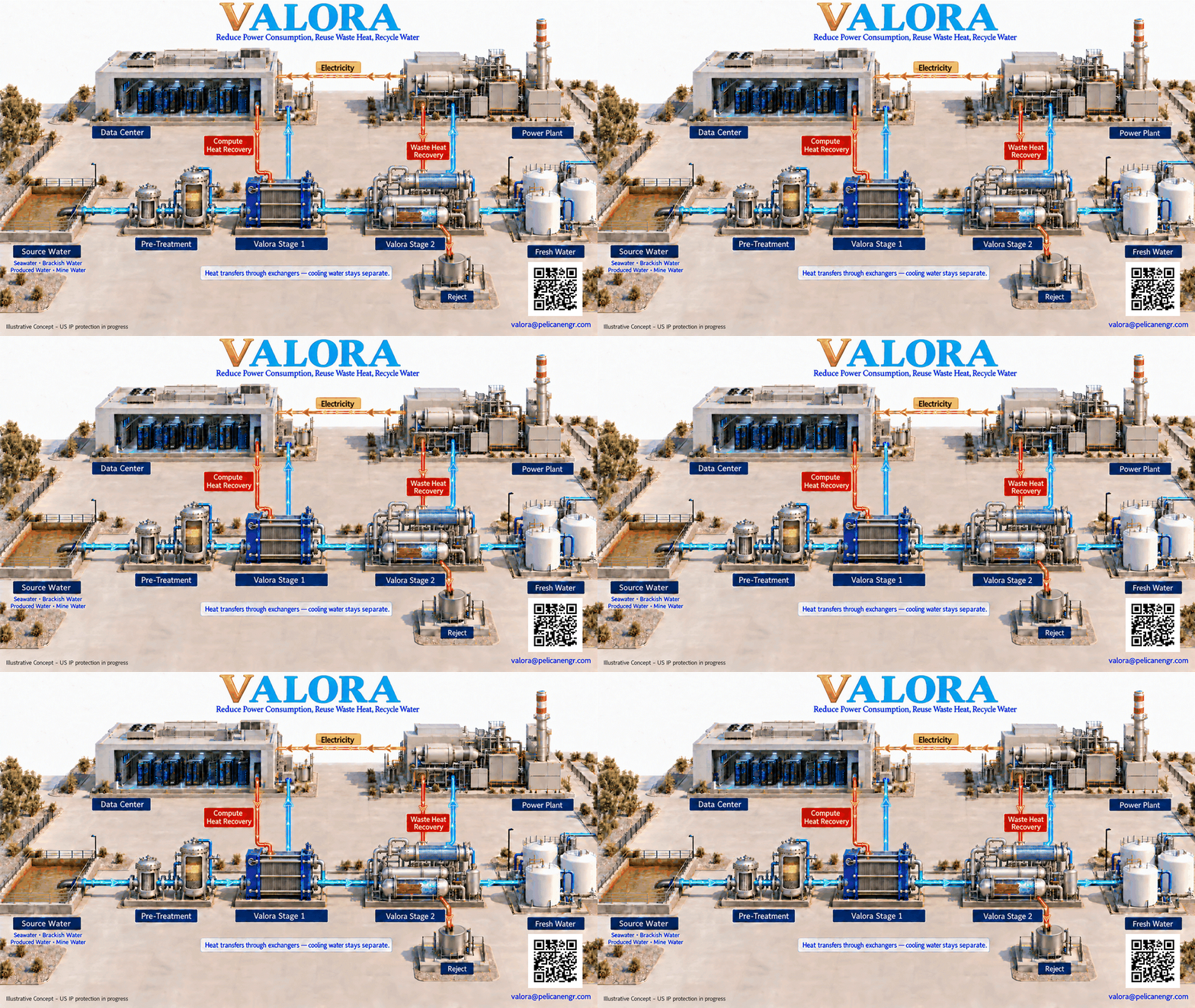
Valora keeps the protected cooling loop separate from the water process and uses a heat exchanger to share useful heat. The site team then confirms the treatment performance, water quality and residuals plan.
Candidate Treatment Pathway
- 01Gather, Sample and Equalize
- 02Remove Free Oil and Bulk Solids
- 03Hydrocyclone, Flotation and Scale Control As Required
- 04Apply Staged Recovered Heat
- 05Thermal Distillation, Qualified Water and Managed Concentrate
Valora Role
Valora may recover low-grade heat that would otherwise be rejected and use it to preheat and thermally separate pretreated produced water.
Potential Value
- Reduce disposal or surface-storage volume
- Produce water for a defined, approved reuse
- Integrate water treatment with power or compute infrastructure
- Create a pathway toward future higher-value reuse
What Must Be Proven
- Oil, organics, salts, metals and variability
- Fouling, scaling and corrosion controls
- Air emissions and residuals management
- Product-water testing and permitted use
- Economics versus disposal and alternatives
Target a Permitted Use First
Initial concepts may prioritize qualified industrial or non-agricultural use. Agricultural reuse should remain a future option unless treatment performance and regulatory acceptance are demonstrated.
Start a Produced-Water ScreenTechnical Sources
General source-water and environmental context, not validation of Valora or a specific site.
A site study confirms the water analysis, treatment path, end use and approvals.