
Water-Treatment Use Case 05
Seawater Desalination
Seawater is naturally salty. Desalination separates water from dissolved salts, opening a path to freshwater for coastal communities and industry.
Understand the Source
Start With the Water
How the Source Develops
Natural weathering carries dissolved minerals to the ocean, and other natural processes contribute salts. Evaporation removes water while leaving salts behind. Salinity is a normal property of the marine environment, not evidence of contamination.
Why Treatment Is Required
Seawater is too saline for most freshwater uses. Membrane or thermal desalination separates a freshwater product from a more concentrated stream. Intake pretreatment and product-water conditioning must be matched to source conditions and the intended use.
Nearby Water and Aquifers
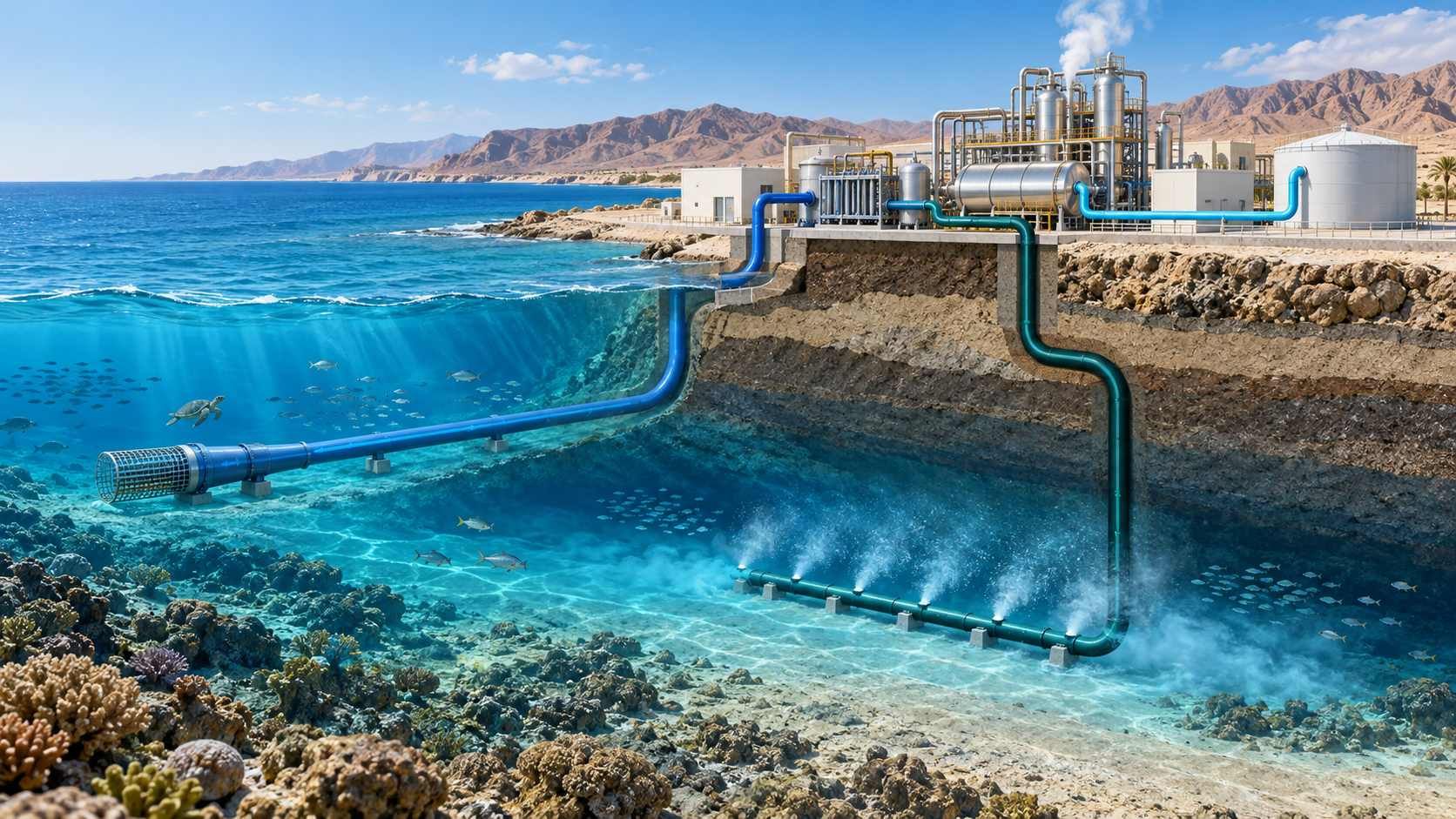
Intakes and concentrate disposal need assessment for local marine conditions. Brine discharge requires a site-specific mixing and environmental review; the diffuser shown is not proof of safe disposal. Where subsurface intakes are considered, review local groundwater connections and effects on freshwater resources.
Where Valora May Fit
Thermal desalination has supplied coastal communities and industries for decades. The opportunity is not to replace proven seawater treatment, but to improve the integration of the available heat sources.
Valora may recover lower-temperature heat from data-center cooling for feed preheating and combine it with suitable power-generation heat for multi-stage thermal distillation (MSTD), MED or another qualified thermal separation process.
View the Valora Process Animation
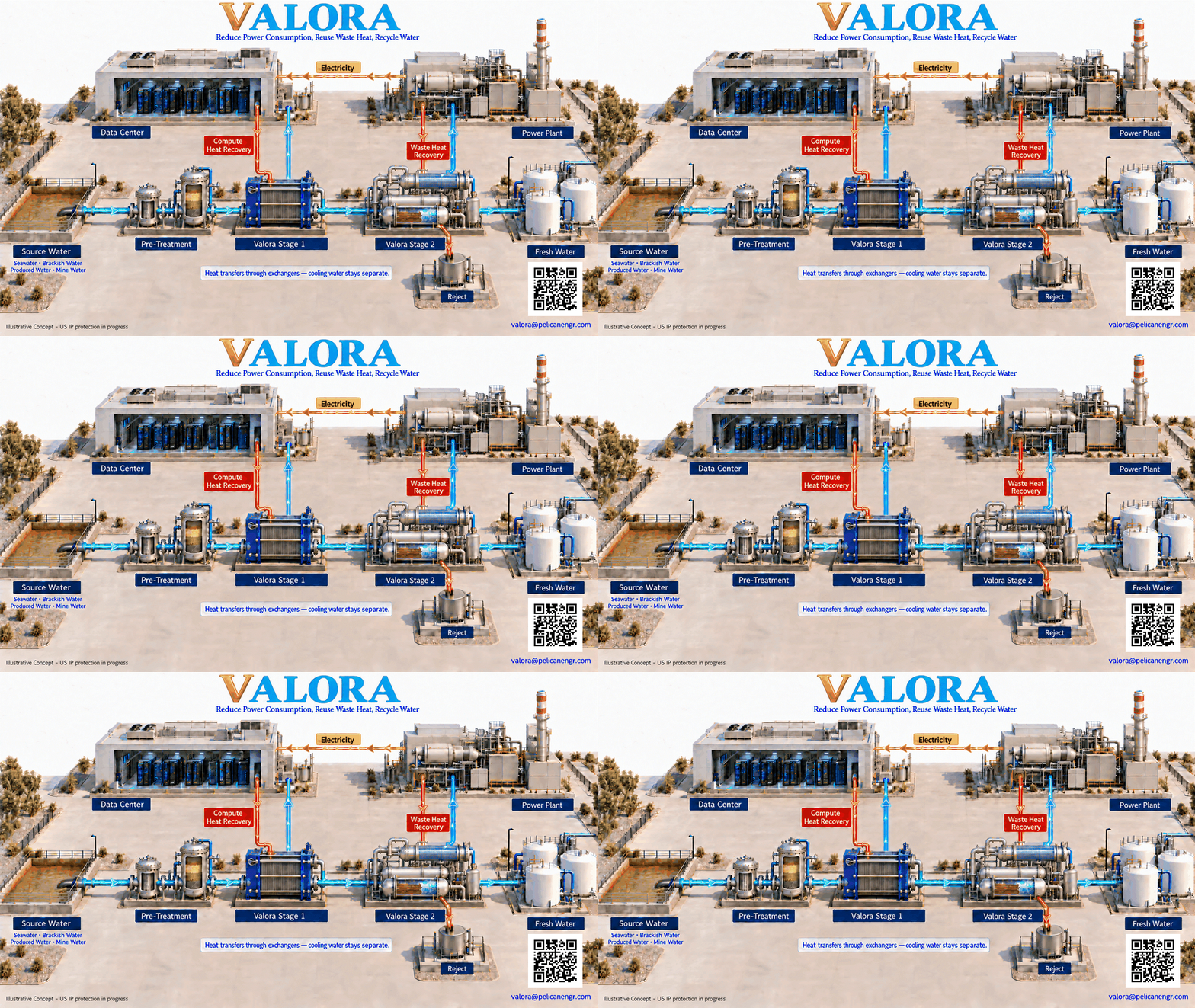
Valora keeps the protected cooling loop separate from the water process and uses a heat exchanger to share useful heat. The site team then confirms the treatment performance, water quality and residuals plan.
Candidate Treatment Pathway
- 01Characterize the Seawater Source and Seasonal Conditions
- 02Screen, Filter and Condition the Intake
- 03Recover Compute Heat for Feed Preheating
- 04Apply Qualified Thermal Duty for Desalination
- 05Condition Freshwater and Manage the Concentrate
Valora Role
Valora arranges the heat sources as a cascade. Compute heat may perform the lower-temperature preheating duty while power-generation heat supplies the temperature level required by the selected desalination process.
Potential Value
- Produce freshwater without relying solely on inland freshwater sources
- Reduce heat rejected by data-center and power-generation systems
- Support coastal industrial and community water demand
- Create a visible local benefit from digital infrastructure
What Must Be Proven
- Intake location, ecology and seasonal seawater quality
- Available heat quantity, temperature and operating profile
- Desalination recovery and product-water requirements
- Brine discharge or beneficial-use route
- Permitting, marine impacts and lifecycle economics
Co-location Creates the Opportunity
Pelican can screen the coastal water source, compute load, power plant and heat-integration basis before a preferred desalination configuration is selected.
Start a Seawater-Desalination ScreenTechnical Sources
General source-water and environmental context, not validation of Valora or a specific site.
A site study confirms intake conditions, treatment, concentrate management and approvals.